Flying Solo: Why Britain's Inns Are the Best-Kept Secret for the Lone Traveller
There's a particular kind of freedom that comes with travelling alone. No negotiating over which route to take, no compromising on where to eat, no alarm set for someone else's schedule. Just you, a bag, and the open road. For years, though, solo travellers in Britain have faced an unspoken obstacle: the assumption that a pub is a group activity, and that turning up alone to an inn was somehow a bit sad.
That assumption is becoming well and truly outdated.
Across the UK, innkeepers are quietly — and in some cases quite deliberately — reshaping how their spaces work for guests travelling on their own. It's not a revolution with a press release attached. It's more of a gradual, thoughtful rethink, driven partly by changing travel habits, partly by savvy hosts who've noticed that solo bookings are on the rise, and partly by a few forward-thinking operators who simply asked: why shouldn't a lone traveller feel just as welcome here as a party of eight?
The Numbers Don't Lie
Solo travel has been growing steadily for the better part of a decade. Industry figures consistently show that single-occupancy bookings represent a significant and increasing share of the accommodation market, particularly among people in their thirties, forties, and fifties who are travelling for leisure rather than business. Many of these guests are actively choosing inns over hotels — drawn by the warmth, the character, and the sense of being somewhere real rather than somewhere generic.
The catch, historically, has been that inns were designed around communal experience. Long tables, shared spaces, menus priced for two. A solo guest could sometimes feel like a logistical afterthought — squeezed into a corner, handed a menu that felt faintly embarrassing to order from alone, and left to eat in silence while the table next to them erupted with laughter over a shared pudding.
The better innkeepers noticed this. And they started doing something about it.
Bar Seating: The Great Equaliser
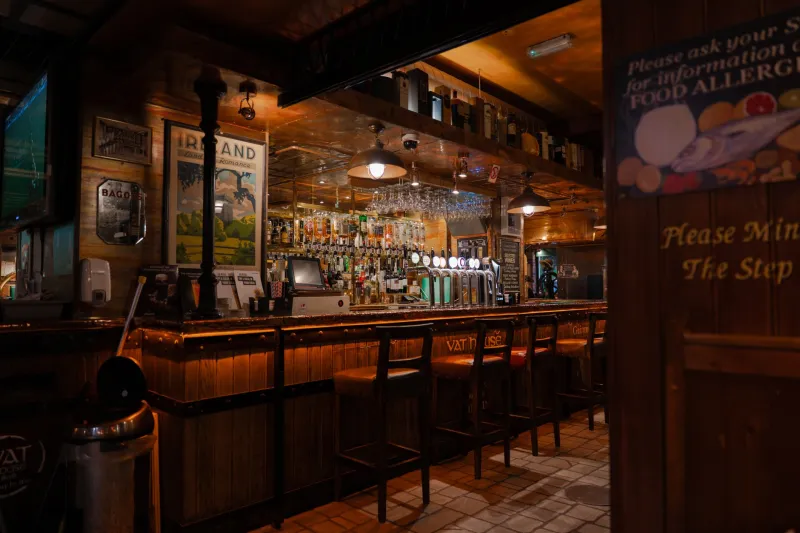
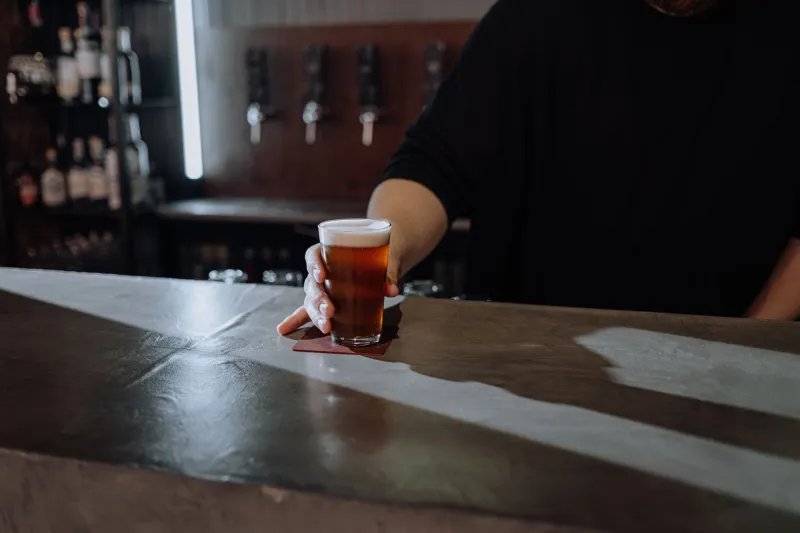
Ask any seasoned solo traveller where they prefer to eat when they're on their own, and the answer is almost always the same: at the bar. There's something about bar seating that dissolves the self-consciousness of dining alone. You're not marooned at a table — you're part of the room. You've got a natural focal point. And if the bar staff are any good, you've got company without obligation.
The smartest inns in Britain have leaned into this. Proper, comfortable bar stools with backs. A stretch of counter that's genuinely welcoming rather than just functional. Bar staff who know how to read a guest — who can tell the difference between someone who wants a chat and someone who wants to quietly nurse a pint with a book.
Sarah, a freelance designer from Bristol who travels alone several times a year, puts it well. "The best inn stays I've had have all involved eating at the bar," she says. "Not because I couldn't get a table, but because the barman at this place in the Lake District just started talking to me about the local fell running scene, and I ended up having one of the best conversations I'd had in months. That doesn't happen at a hotel."
It's that quality — genuine, unhurried human connection — that inns can offer in a way that branded accommodation simply can't replicate.
Quiet Corners for the Introvert
Of course, not every solo traveller wants conversation. Some are travelling precisely because they need a break from it. The introvert's version of a perfect inn stay involves a good book, a window seat, something decent to eat, and absolutely no pressure to be sociable.
The best inns understand this too. A thoughtfully designed space doesn't force interaction — it makes it available. A window table tucked away from the main bar. A reading nook with a decent lamp. A garden bench that's genuinely sheltered. These aren't luxuries; they're signals that the inn has thought about the full range of guests who might walk through the door.
Mark, a secondary school teacher from Edinburgh who takes a solo walking trip every autumn, describes what he looks for in an inn. "I want somewhere I can come in after a long day on the hills, have a shower, sit somewhere comfortable, eat something proper, and just decompress. I don't want to feel like I'm in the way, or like the staff are wondering why I'm not talking to anyone. The best places just let you be."
That phrase — let you be — comes up again and again when you talk to solo travellers about what they value most. It sounds simple. In practice, it requires a particular kind of attentiveness from staff.
Training Staff to Read the Room
This is where innkeeping becomes something closer to an art form. The difference between a solo guest who leaves feeling genuinely looked after and one who leaves feeling invisible often comes down to the people behind the bar and on the floor.
Some inns are now actively training staff to recognise the particular rhythms of solo guests. Not in a scripted, corporate-training-video kind of way — nothing kills the atmosphere of a good inn faster than forced friendliness — but in a more instinctive, observational sense. Is this guest making eye contact and leaving conversational openings? Or are they heads-down, clearly in their own world? Adjust accordingly.
Small gestures matter enormously. Recommending a walk that's genuinely worth doing rather than the default tourist answer. Mentioning that the kitchen can do a half-portion of the sharing board if someone's eating alone. Noticing that a guest has finished their drink and asking if they'd like another without making them feel they're being hurried along.
These things don't cost anything. But they accumulate into an experience that a solo traveller will remember — and recommend.
Single Supplement: The Elephant in the Room
It would be dishonest to write about solo travel at British inns without mentioning the single supplement. The practice of charging solo guests a premium for occupying a room alone remains a genuine frustration for lone travellers, and it's one that some inn owners are beginning to question.
A growing number of smaller, independent inns have quietly dropped the supplement altogether, or significantly reduced it, recognising that a room occupied by a solo guest who returns year after year is worth more than a room that sits empty because the pricing felt punitive. It's a commercial calculation as much as a philosophical one — but it sends a clear signal about how welcome solo guests actually are.
Why the Inn, and Not the Hotel?
For all the progress being made, it's worth stepping back and asking why inns, specifically, are becoming such a draw for solo travellers. The honest answer is character.
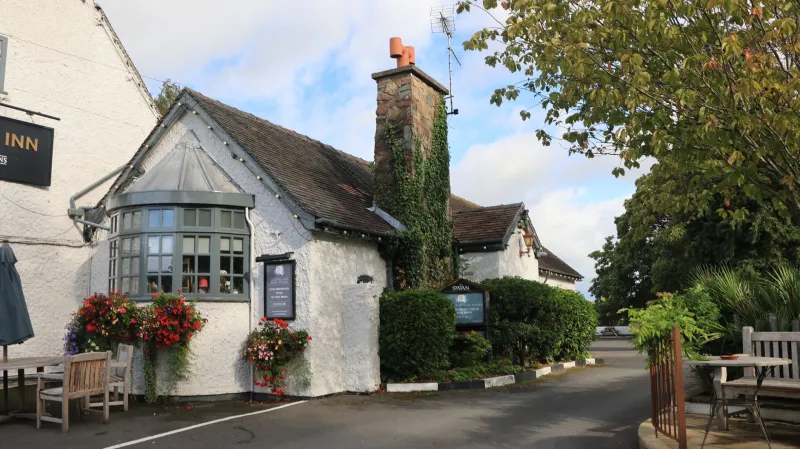
A hotel, however comfortable, tends to be a transaction. You pay, you stay, you leave. An inn — a proper British inn, with its uneven floors and local ales and landlord who knows the name of every sheep farmer in the valley — offers something harder to quantify. A sense of place. A story. The feeling that you've landed somewhere, rather than simply stopped.
For a solo traveller, that sense of place is particularly precious. When you're not sharing the experience with someone else, the experience itself has to carry more weight. And a good inn, with the right host and the right atmosphere, delivers that in a way that's genuinely hard to beat.
So if you've been putting off that solo trip because you weren't sure how you'd fill the evenings — pull up a stool, order something from the specials board, and let the inn do the rest. Britain's innkeepers, the good ones at least, have been waiting for you.