Behind Closed Doors: The Housekeeping Magic That Makes or Breaks a British Inn Stay
There's a particular kind of pleasure in pushing open the door to your inn room and finding everything exactly right. Fresh flowers on the windowsill. Crisp white linen folded with quiet precision. The faint scent of something clean and unperfumed. You don't stop to analyse it — you simply exhale, drop your bag, and feel immediately at ease.
What you probably don't think about is the team that made it happen.
Housekeeping is, by design, invisible. The best rooms feel effortlessly immaculate, as though no one has ever slept there before and yet somehow it already feels like home. That paradox — lived-in but pristine, personal but never intrusive — is extraordinarily difficult to pull off. And at Britain's finest inns, it's treated as a craft every bit as serious as cooking or front-of-house service.
The Detail You Didn't Know You Were Noticing
Ask most guests what they remember about a great inn stay and they'll mention the food, the landlord's warmth, maybe the view from the window. Rarely will anyone cite the ironed pillowcases or the lime-scale-free shower screen. But speak to any experienced innkeeper and they'll tell you the same thing: guests notice these details subconsciously, even when they can't name them.
"People don't always know why they feel comfortable in a room," says Sarah Elliot, head housekeeper at a 17th-century coaching inn in the Cotswolds. "But if the mattress protector is bunched up under the sheet, or there's a smear on the mirror, something just feels off. They might not complain. They just won't come back."
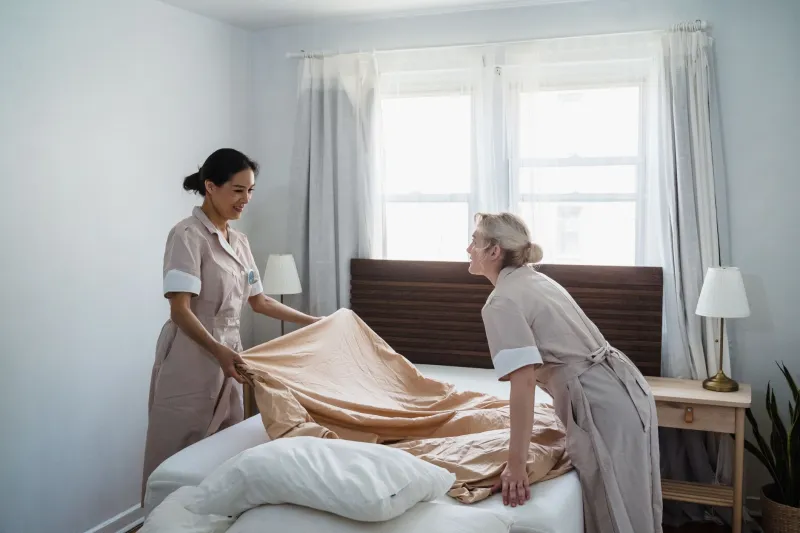
Sarah has worked in inn housekeeping for over two decades, and her attention to detail borders on the obsessive — in the best possible way. She talks about linen temperature (always warm when it hits the bed, never cold from a shelf), about the exact angle a towel should be folded, about checking skirting boards not because guests run their fingers along them, but because the habit of looking at everything keeps standards consistently high.
"If you only clean what guests notice," she explains, "you'll always be one step behind."
Linen: The Thing Guests Touch Most and Think About Least
Of all the elements that go into a well-kept inn room, linen is arguably the most telling. It's the thing you're in direct contact with for six to eight hours. It affects how you sleep, how rested you feel the next morning, and whether you'd describe the room as luxurious or merely adequate.
Thread count is often cited as the key metric, but experienced housekeepers are more nuanced about it. A high thread count in a synthetic blend can feel clammy and stiff. A well-laundered 200-thread-count pure cotton sheet, pressed and aired properly, can feel genuinely sumptuous. The finishing matters as much as the fabric.
At a well-regarded inn in the Yorkshire Dales, the housekeeper washes all bed linen on-site rather than using a commercial laundry service — a deliberate choice. "We can control the temperature, the drying time, the ironing," she says. "When you outsource that, you lose consistency. Some weeks the sheets come back beautifully. Other weeks they smell faintly of industrial detergent and that's not something any amount of room spray can fix."
For guests doing their research before booking, linen quality is one of those things worth specifically looking for in reviews. Comments like "the bed was incredibly comfortable" or "I slept better than I have in months" are often indirect tributes to good housekeeping rather than mattress quality alone.
Maintenance: The Unglamorous Backbone of a Great Stay
Beyond cleanliness, there's the quieter discipline of maintenance — the ongoing work of keeping an older building in proper working order. Britain's inns are full of character precisely because many of them are centuries old, and that charm comes with a set of practical challenges. Draughty windows. Uneven floors. Radiators with their own opinions about when to come on.
What separates a well-run inn from a frustrating one is how proactively these things are managed. A rattling window latch that's been reported three times but never fixed is a failure of housekeeping culture as much as maintenance. "My team are my eyes and ears," says one inn owner in the Lake District. "They're in every room, every day. If something's wrong — a flickering bulb, a wobbly towel rail, a drawer that sticks — I want to know about it before a guest does."
This proactive mindset is what distinguishes genuinely exceptional inns. It's not about perfection — old buildings will always have their quirks — but about the attitude with which those quirks are managed. A handwritten note explaining that the window in Room 4 is a bit stiff, with a smile and a genuine apology, lands very differently from a guest discovering it themselves at 11pm on a cold January night.
What to Look For When You're Booking
So how do you gauge housekeeping standards before you arrive? A few things worth paying attention to:
Read recent reviews carefully. Comments about cleanliness, bed comfort, and room condition are your best proxy for housekeeping quality. Look for consistency across multiple reviewers rather than a single glowing write-up.
Check the photos — but look at the details. Marketing photographs are curated, but even staged shots reveal things. Are the cushions plumped uniformly? Are the towels folded neatly? Is there clutter on surfaces or does everything look considered?
Ask directly. A good inn won't be offended by a guest asking whether linen is changed daily for multi-night stays, or whether rooms are serviced every morning. The answer — and the way it's delivered — tells you a lot.
Trust your instincts on arrival. The moment you walk into your room, you'll know. If it smells fresh, if the surfaces are clear, if the bed looks genuinely inviting rather than just technically made, you're in good hands.
The People Who Make It Possible
Perhaps the biggest shift in how Britain's best inns approach housekeeping is cultural: a growing recognition that the people doing this work deserve proper investment, training, and respect. High staff turnover in housekeeping — a longstanding issue across the hospitality sector — is directly correlated with inconsistent standards. Inns that retain their housekeeping teams, pay them fairly, and treat their expertise as genuinely skilled work tend to be the ones that consistently deliver exceptional stays.
"I've been here eleven years," says Sarah Elliot. "I know every room. I know which floorboard squeaks, which radiator needs bleeding in October, which guest always leaves the window open. That kind of knowledge takes time to build. You can't replace it with a checklist."
She's right. And the next time you walk into a room that feels quietly, effortlessly perfect — take a moment to appreciate the person who made it that way. They probably started work before breakfast, and you'll never cross paths. But the comfort of your entire stay rests, in no small part, on their hands.