Room to Talk: The British Inns Bringing Back the Art of Talking to Strangers
Somewhere between the rise of the smartphone and the long isolation of the pandemic years, something quietly disappeared from the British pub and inn experience: the casual conversation with someone you've never met before. The chat at the bar that leads somewhere unexpected. The shared table that turns into a two-hour dinner. The fellow guest who recommends a walk you'd never have found otherwise.
It didn't vanish entirely, of course. But it retreated. And a certain kind of inn — thoughtful, community-minded, deliberately designed — has decided to bring it back.
What Was Lost (and Why It Mattered)
The public bar of a British inn was never just a place to drink. At its best, it was a kind of civic infrastructure — a space where people from different backgrounds, with different stories, ended up in the same room and occasionally surprised each other. The farmer and the visiting academic. The long-distance walker and the couple celebrating an anniversary. The regulars and the first-timers.
This mixing wasn't accidental. It was a function of design, tradition, and a particular British understanding of what a pub is for. The long bar counter that everyone gravitated towards. The communal tables. The lack of table service that meant you had to stand next to someone while you waited for your pint.
Modern hospitality trends — private dining rooms, table service throughout, deep individual booth seating, the dominance of the phone screen — gradually eroded those conditions. The inn became a collection of private experiences happening in the same building rather than a shared one.
The Innkeepers Who Noticed
A growing number of innkeepers have started pushing back against this drift, and they're doing it in specific, practical ways.
Some have reconsidered their seating layouts entirely. Rather than filling every corner with small tables for two, they've reintroduced the long communal table — a single surface that seats eight or ten, where guests sit alongside whoever else is staying or eating that evening. It sounds simple, but the effect is significant. It's much harder to stare at your phone when there's someone sitting directly beside you who's just asked where you've come from.
Others have invested in what you might call conversational architecture — the physical and visual elements of a space that give people something to talk about before they've found the words themselves. A wall covered in old Ordnance Survey maps of the local area. A collection of walking sticks with handwritten labels explaining where each one came from. A blackboard asking guests to write down their best local discovery of the day.
These aren't gimmicks. They're invitations. And they work because they give strangers a shared reference point — something to look at, react to, and comment on without the social risk of a cold introduction.
The Bar as Social Engine
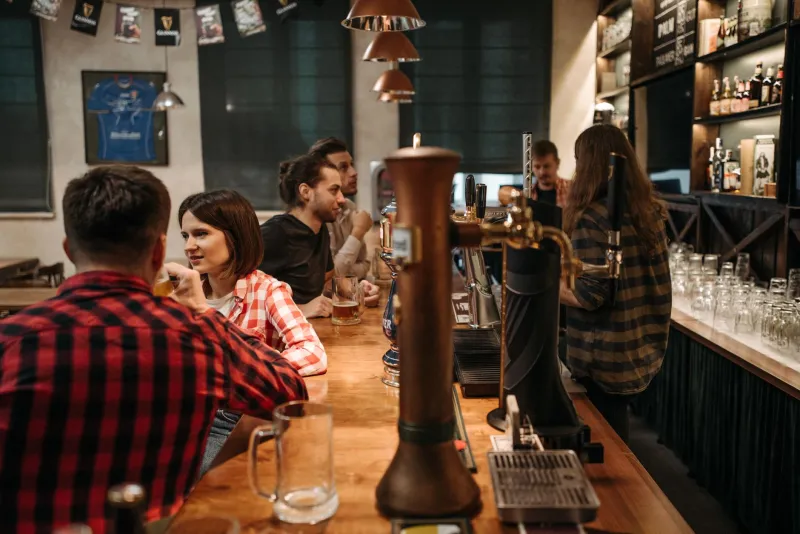
The bar counter remains the most powerful tool an inn has for facilitating connection, and the inns that understand this treat it accordingly. A good bar isn't just a surface for ordering drinks — it's a stage, a gathering point, and a social leveller all at once.
Inns that have deliberately revived the public bar ethos tend to share a few characteristics. The bar staff are trained to introduce guests to each other — not in a forced, corporate way, but naturally, when the moment presents itself. "Have you met — he's just walked the same route you're planning tomorrow." It sounds small, but it's transformative.
Some inns have brought back the practice of keeping a 'locals' board' — a physical noticeboard or chalkboard where regulars, staff, and guests can leave recommendations, questions, and responses. It creates a running conversation that spans different visits and different people, and gives newcomers an immediate sense of belonging to something ongoing.
Designed for Lingering
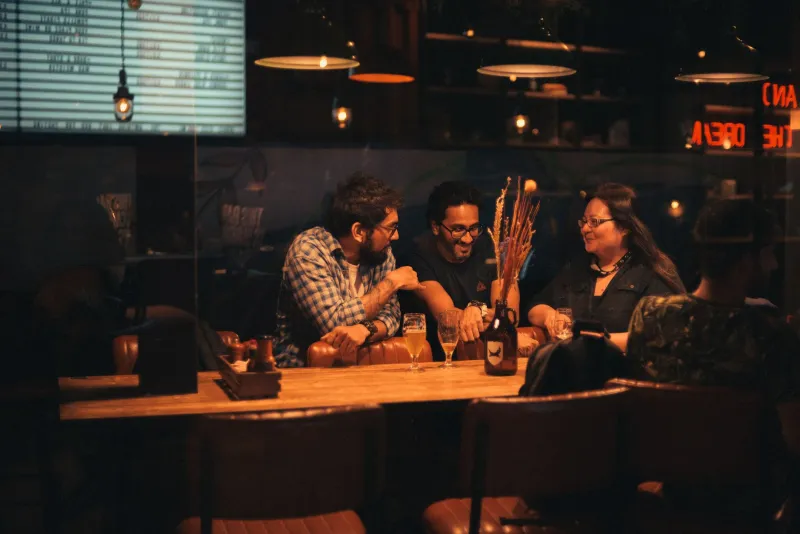
The physical comfort of a space matters enormously. Inns that want people to stay and talk invest in seating that's actually comfortable enough to sit in for two hours. Deep armchairs near the fire. Bar stools at the right height. Lighting warm enough that nobody feels exposed or surveilled.
There's a reason the most convivial inns often feel slightly dim and slightly worn. It's not neglect — it's permission. A slightly battered leather sofa and a lamp that doesn't quite reach the corners of the room creates conditions where people relax and settle in rather than perching and leaving. The inn becomes, for an evening, an extension of your living room rather than a commercial transaction.
What Travellers Are Actually Looking For
The appetite for this kind of experience has grown noticeably in recent years. Solo travellers, in particular, have driven a shift in expectations — they're not looking for isolation, they're looking for a place where connection feels possible without being pressured. The inn that gets this right offers a particular kind of freedom: you can talk to people, or you can be quietly alone, and both are entirely fine.
Post-pandemic, there's also been a broader reckoning with what we actually want from travel. Passive consumption — beautiful rooms, good food, efficient service — turns out to be less satisfying than it looks in photographs. What people remember, and return for, is the unexpected conversation. The evening that went somewhere they didn't plan. The recommendation that led to something brilliant.
British inns, at their best, have always been the places where those evenings happen. The ones that are actively designing for it — through their spaces, their staff, their deliberate small gestures — are reminding us of something we perhaps knew all along: that the best thing about staying somewhere new is the people you end up talking to.
How to Find Them
These inns don't always advertise their approach explicitly — it tends to show in the details rather than the marketing copy. Look for communal seating mentioned in room descriptions. Ask the innkeeper directly whether they encourage guests to mingle. Read the reviews for phrases like "ended up chatting to the most interesting people" or "felt like part of the place immediately."
When you find one, put the phone away. Pull up a stool. The person next to you might just be the best thing about the trip.