What's On the Pump Tells You Everything: Reading a British Inn Through Its Bar
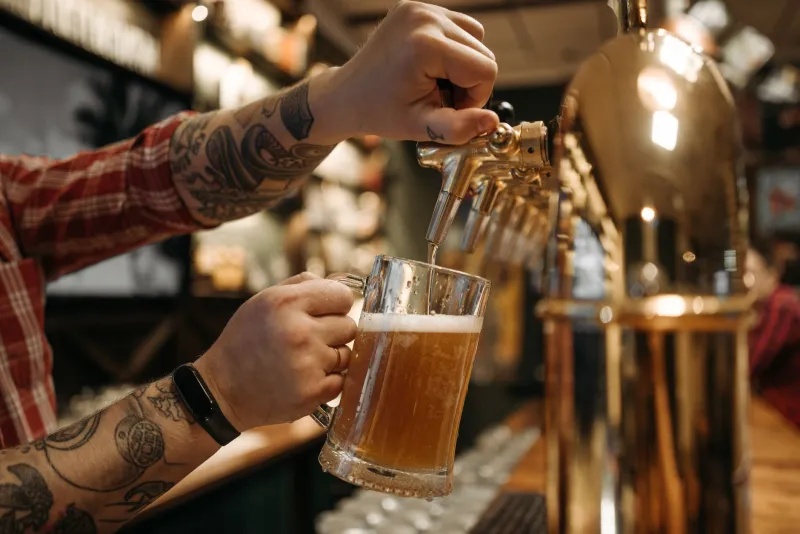
There's a moment every seasoned inn-goer knows well. You push open the door, take in the room — the low ceiling, the worn flagstones, maybe a dog asleep near the hearth — and then your eyes drift to the bar. Specifically, to the pumps. And in that brief scan, before you've even ordered, you've already learned something important about the place.
Britain's inns have always been defined by their drink as much as their rooms. But in recent years, the relationship between a landlord and their beer list has become something closer to a philosophy. The choices behind the bar — which breweries make the cut, how the selection shifts with the seasons, whether there's a local cider quietly lurking at the end of the counter — say more about an inn's character than almost any other single thing.
The Pump Clip as a Statement of Intent
Walk into a great British inn and you'll often find pump clips you half-recognise — names from the next county, perhaps, or a brewery that's only been running for three years but is already doing something genuinely interesting with a traditional bitter. That's not accidental. Landlords who care about their beer spend real time sourcing it.
The difference between an inn that stocks whatever the regional distributor drops off and one that actively cultivates relationships with independent brewers is immediately obvious. It's in the variety, yes, but also in the knowledge. Ask a switched-on landlord about anything on their bar and they'll tell you where the hops came from, why they chose that particular pale ale for summer, or how long they've been working with the family brewery up the road. That kind of enthusiasm is infectious — and it makes the drink taste better, somehow.
For guests, it's also a reliable shorthand. An inn that's taken the trouble to stock a rotating guest ale from a small-batch brewer in Shropshire, or that keeps a traditional mild on alongside the more fashionable craft options, is almost certainly paying the same attention to everything else: the food, the rooms, the welcome.
Local Isn't Just a Buzzword Here
Britain's brewing geography is extraordinary. Every region has its own traditions, its own flavour profiles, its own quiet arguments about what a proper bitter should taste like. Yorkshire's inns have long championed their county's brewers with something close to civic pride. The West Country has its ciders, its golden ales, its long-standing independents. In the Midlands, dark milds and robust porters still hold their ground. Scotland brings its own entirely distinct brewing culture to the table.
The best inns lean into this regional identity rather than smoothing it out. There's something genuinely satisfying about ordering a pint in the Peak District and being handed something brewed less than twenty miles away — a drink that, in a very real sense, belongs to the landscape you've been walking through all day. It's the liquid equivalent of a menu that name-checks its suppliers, and it matters for the same reasons.
This isn't about being precious or excluding well-known names. It's about proportion and intention. An inn that dedicates two or three of its taps to genuinely local producers, while perhaps keeping a familiar national lager for those who want it, has found a sensible balance. One that could swap its entire bar into any motorway hotel without anyone noticing has missed the point entirely.
The Landlord as Curator
It's worth thinking about what goes into building a good bar offer, because it's considerably more work than most guests realise. Landlords who take it seriously are constantly tasting, visiting, and negotiating. They're making calls to small breweries, keeping an eye on what's coming out of the local scene, and making difficult decisions about what to drop when something better comes along.
Many of the finest inn landlords in Britain will tell you that their relationship with their suppliers is one of the most important they have. Some have been working with the same family brewery for decades. Others actively seek out newer producers, seeing it as part of their job to champion what's emerging rather than just what's established. Either approach, done with genuine commitment, results in a bar that feels curated rather than assembled.
This curation extends beyond the ales. A thoughtful cellar might include a local gin distilled nearby, a wine list that doesn't take itself too seriously but has clearly been chosen with some care, and perhaps a soft drinks selection that goes beyond the standard fizzy options. The through-line is the same: someone has thought about this, and that thought is visible in every choice.
What to Look For When You Walk In
If you want a quick sense of whether an inn is going to deliver on its promise, the bar is your best diagnostic tool. Here's what to notice:
Variety with purpose. A good selection doesn't mean twenty taps of broadly similar pale ales. It means range — something dark, something sessionable, something with a bit of character — chosen deliberately rather than by accident.
Local representation. Even one or two pumps dedicated to genuinely regional producers is a good sign. Ask where they're from if you're not sure.
Condition. A well-kept cask ale, served at the right temperature and pulled properly, is a joy. A poorly kept one is a sign that the cellar isn't being looked after — which tends to suggest other things aren't being looked after either.
The staff's knowledge. You shouldn't need to know everything about beer to order a pint, but if the person behind the bar can't tell you anything about what's on offer, that's worth noting.
A changing guest tap. An inn that rotates one of its taps regularly is one that's actively engaged with the wider brewing world. It's a small thing, but it signals curiosity.
A Pint That Belongs to the Place
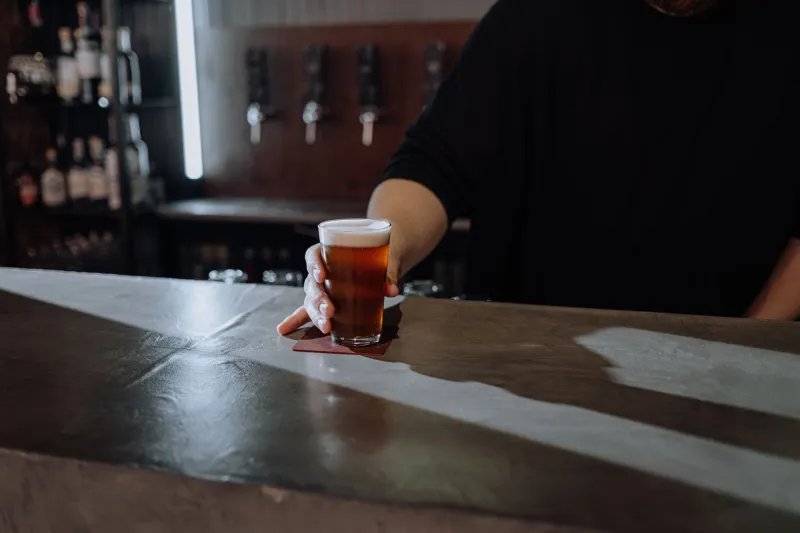
There's a reason that the image of a British inn — in the popular imagination, on postcards, in the kind of travel writing that makes you want to immediately book somewhere — almost always includes a pint glass. It's not just nostalgia. It's because the drink and the place have always been inseparable.
The best inns understand this instinctively. They know that the beer they serve is part of the experience in a way that goes beyond simple refreshment. It connects the guest to the landscape, to the local economy, to the brewing traditions of the region. It gives you something to talk about with the person on the next stool. It makes the room feel like it belongs somewhere specific, rather than nowhere in particular.
So next time you're choosing where to stay, take a moment to look up the bar before you book. Check whether they mention their suppliers. See if there's a local brewery in the mix. It's a small thing — but in Britain's best inns, it's rarely a coincidence.