Rooms Full of Stories: How the Best British Inns Wear Their Local Identity With Pride

Photo by Photo by Brett Wharton on Unsplash on Unsplash
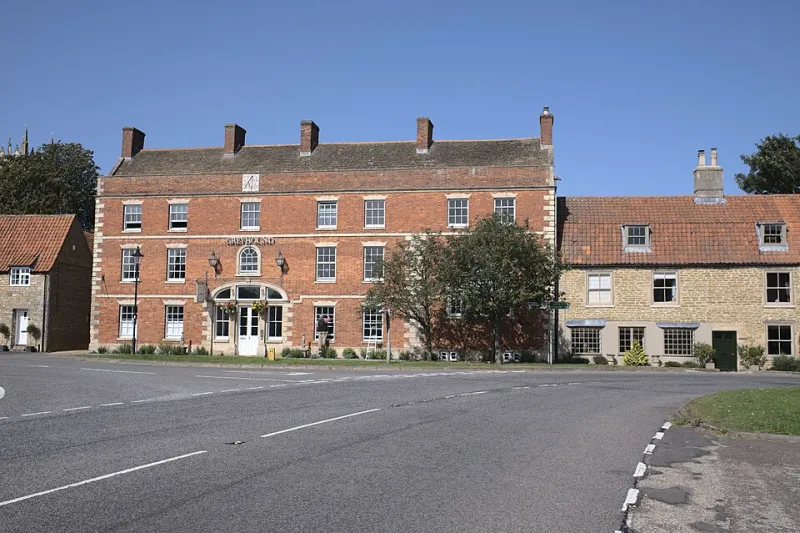
There's a particular kind of magic that happens when you step into a British inn and feel, almost immediately, that you couldn't possibly be anywhere else. Not just because of the low beams or the flagstone floors — though those help — but because of something more considered. A framed map of the local moors. A shelf of novels by writers who grew up in the next village. A menu that name-checks the farm three miles down the road. These details don't happen by accident.
The best innkeepers in Britain are, quietly and without much fanfare, doing something rather remarkable. They're acting as custodians of place — gathering the threads of local history, regional tradition, and community identity and weaving them into the experience of every guest who walks through the door.
More Than Décor: The Philosophy Behind a Curated Inn
Walk into The Fleece at Bretforton in Worcestershire — a National Trust-owned inn that dates back to the fourteenth century — and you're not just entering a pub. You're stepping into a room that has barely changed in centuries, complete with original pewter collection and flagstones worn smooth by generations of feet. The point isn't nostalgia for its own sake. It's continuity. A reminder that this particular patch of England has its own story, and you're briefly part of it.
This instinct to root an inn in its surroundings is something many innkeepers describe as almost instinctive. "We didn't set out to create a theme," says one proprietor of a small inn on the edge of Dartmoor. "We just kept asking ourselves: what does this place actually feel like? What does it smell like in autumn? What did people do here a hundred years ago? The answers ended up in every room."
For her, that meant salvaged timber from a local barn, prints from a Tavistock-based artist, and a small lending library stocked almost exclusively with books about Devon — fiction, folklore, natural history, walking guides. Guests, she says, often pick one up out of mild curiosity and end up reading it cover to cover over breakfast.
The Bookshelf as a Statement of Intent
It might seem like a small thing, a shelf of books. But innkeepers who've thought carefully about it will tell you it's anything but. Books signal what a place values. A carefully chosen collection — local poets, regional histories, well-thumbed walking guides, perhaps a novel set in the very valley outside — tells a guest that their host has paid attention. That this isn't a room assembled from a catalogue.
At a converted coaching inn in the Yorkshire Dales, the owner has spent years building what he half-jokingly calls "the most northerly library of northern literature in England." Shelves in the snug hold everything from James Herriot to Ted Hughes, alongside self-published pamphlets from local historical societies and hand-drawn maps of long-distance footpaths. "People come back specifically because of those shelves," he says. "They'll finish a book at home and post it back to us. That tells you something."
The gesture creates a kind of conversation between the inn and its guests — one that extends beyond the stay itself.
Architecture as Storytelling
Of course, not every inn has the luxury of starting from scratch. Many are working with buildings that carry their own histories in the walls, and the innkeeper's job becomes one of interpretation rather than invention.
A sixteenth-century inn in Ludlow, Shropshire, keeps a laminated card in every room explaining the history of the particular architectural feature that makes that space unusual — a blocked-up doorway here, a section of exposed wattle and daub there. What might otherwise be an inconvenient irregularity becomes a point of genuine intrigue. Guests, rather than minding the uneven floors, start to find them charming once they understand what they represent.
"We stopped apologising for the building's quirks about five years in," the owner admits. "Now we celebrate them. The slightly sloping ceiling in room four? That's because of how the original roof was extended in the 1600s. Once you know that, it's not a flaw — it's a feature."
Regional Food as Living History
The connection between place and identity doesn't stop at the walls. Many innkeepers extend their sense of regional pride directly onto the plate. This isn't just about sourcing locally — though that matters too — it's about choosing dishes that carry cultural weight.
An inn in the Lake District recently reintroduced Borrowdale tea bread to its afternoon menu, a recipe that had largely disappeared from local tearoom culture. "People from Cumbria recognised it immediately," says the chef-owner. "Visitors from further afield had never heard of it. Both reactions were exactly what we were hoping for."
That dynamic — familiar to locals, revelatory to visitors — is at the heart of what makes a regionally rooted inn so satisfying. It rewards those who already know the area and educates those who are just arriving.
Why It Matters More Than Ever
In an era when travel has never been easier and chain hotels have never been more ubiquitous, the inn that commits to its local identity offers something genuinely irreplaceable. You can get a reliable bed and a decent breakfast almost anywhere. You can't get the particular feeling of sitting in a room that knows exactly where it is and isn't embarrassed about it.
For guests, the practical takeaway is simple: when you're choosing where to stay in Britain, look beyond the thread count and the TripAdvisor rating. Look for the inn that's clearly been shaped by someone who cares about the place. Check whether the menu mentions local farms by name. See if there's a bookshelf that looks like it was chosen rather than installed. Notice whether the art on the walls has a story attached to it.
Those are the inns worth seeking out — and they're more common than you might think, tucked into market towns and coastal villages and moorland edges all across the country, each one quietly making the case that where you are is worth paying attention to.