Old Beams, New Tricks: The Reinvention of the Great British Inn
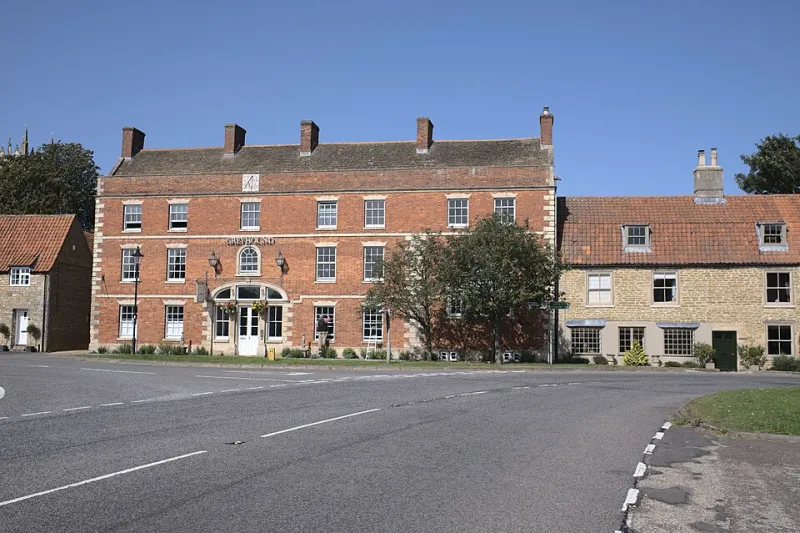
Photo: Bob Harvey , CC BY-SA 2.0, via Wikimedia Commons
Let's be honest about something. The romantic image of the British inn — low ceilings, roaring fire, a landlord who knows everyone's name — has always come with a few less romantic footnotes. The bathroom down the corridor. The mattress with the suspicious dip in the middle. The single-glazed window rattling in the January wind.
For generations, travellers accepted these inconveniences as part of the charm. Character, they called it. And to be fair, there's something genuinely appealing about sleeping in a building that predates most of the world's nations. But the hospitality landscape has shifted considerably, and today's guests — even the most heritage-minded among them — tend to want their history served alongside a decent shower pressure and a USB charging point.
The question facing Britain's historic inns is not whether to modernise, but how to do it without losing the very soul that makes them worth visiting in the first place.
A History Worth Preserving
Britain's inn culture is extraordinary by any global standard. Many of the country's surviving coaching inns date back to the 16th and 17th centuries, built to serve travellers on the great road networks that connected market towns and cathedral cities. They were the motorway service stations of their day — functional, busy, essential — but they accumulated layers of history, character, and community that no modern equivalent could replicate.
The George Inn in Southwark, London, still retains its original galleried courtyard. The Feathers Hotel in Ludlow, Shropshire, is considered one of the finest examples of Jacobean timber-framing in England. The Bell at Stilton in Cambridgeshire is where Stilton cheese was first sold commercially. These aren't just old buildings — they're living documents of British social history.
Preserving that heritage whilst adapting to contemporary expectations isn't simply a business challenge. For many innkeepers, it's a genuine vocation.
The Renovation Tightrope
Anyone who has ever attempted to renovate a listed building will know that it's not quite the straightforward undertaking that a fresh lick of paint might suggest. Planning restrictions, structural quirks, and the sheer unpredictability of what lies behind centuries-old plaster all conspire to make modernisation a slow, expensive, and occasionally maddening process.
And yet, the inns that have navigated this process thoughtfully are producing results that are nothing short of remarkable.
Take The Talbot at Mells in Somerset, a 15th-century inn that underwent sensitive restoration a few years back. The team there made a deliberate decision to retain imperfections — uneven flagstone floors, exposed stonework, slightly wonky doorframes — while investing heavily in the things guests actually need: quality beds, proper insulation, and bathrooms that feel genuinely luxurious rather than retrofitted as an afterthought. The result is a place that feels authentically old and authentically comfortable at the same time.
"The mistake people make is thinking heritage and comfort are opposites," says interior designer Fiona Baxter, who has worked on several inn renovation projects across the Midlands and the North. "They're not. You can have both. The key is knowing which things to preserve and which things to quietly improve without making a fuss about it."
Sustainability: From Afterthought to Cornerstone
One of the most significant shifts in how British inns are reinventing themselves is the growing centrality of sustainability — not as a marketing badge, but as a genuine operational philosophy.
Older buildings, counterintuitively, often have a head start here. Stone walls that have regulated temperature for three hundred years don't need much help from a modern HVAC system. Original sash windows, properly restored and draught-proofed, can be surprisingly energy-efficient. Several inns are now generating their own power through solar installations on outbuildings and barn conversions, keeping the main historic structure visually unchanged whilst dramatically reducing their carbon footprint.
The Woolpack Inn in Eskdale, Cumbria — a remote fell inn that has been welcoming walkers and cyclists for well over a century — recently installed an air source heat pump and switched to a local supplier for virtually everything it serves. The energy bills dropped. The reviews improved. The locals felt more invested in the place.
It's a pattern being repeated across the country, from Northumberland to the New Forest. The inns that are thriving are increasingly those that have woven sustainability into their identity rather than bolting it on as an afterthought.
The Authenticity Paradox
Here's where things get philosophically interesting, and where opinions among innkeepers diverge sharply.
There's a growing school of thought that argues some inns have overcorrected — that in their rush to attract a contemporary audience, they've smoothed away precisely the rough edges that gave them their appeal. Exposed brickwork painted over in fashionable grey. Original pub furniture replaced with Scandi-influenced minimalism. A craft cocktail menu where a pint of local bitter used to be the point.
It's a fair criticism. There's a certain type of inn renovation that results in a space that could be anywhere — that has traded genuine character for a curated aesthetic that photographs beautifully on Instagram but feels oddly hollow in person.
The best innkeepers seem to understand this intuitively. They're not trying to create a museum, but they're not trying to erase the past either. They're having a conversation with the building — listening to what it is, then asking what it could be.
What Modern Guests Actually Want
For all the philosophical debate, it's worth grounding the conversation in what travellers are actually asking for when they book a historic inn.
Reliable Wi-Fi consistently tops the list — not because guests want to spend their weekend staring at a screen, but because connectivity has become a baseline expectation rather than a luxury. Comfortable beds with quality linen come a close second. After that, it's a fairly even split between guests who prioritise a great food and drink offer and those who simply want a genuinely warm welcome.
Notably, what doesn't appear prominently on most wish lists is a stripped-back, design-forward aesthetic. Guests choosing a historic inn are, by definition, choosing it for what it is. They want the beams. They want the slightly uneven floors. They want the sense that something interesting happened in this room before they arrived.
The opportunity for Britain's historic inns, then, is not to become something they're not — it's to become the best possible version of what they already are.
A Bright Future Built on Old Foundations
The British inn is not a relic. It's a resilient, adaptable institution that has survived the Black Death, the Industrial Revolution, the temperance movement, two world wars, and the arrival of budget hotel chains. It'll survive Instagram too.
What's happening right now across the UK's inn landscape is genuinely exciting. Thoughtful owners are investing in their properties with a care and intelligence that the buildings deserve. Guests are rediscovering the particular pleasure of staying somewhere that has a story — somewhere that feels, unmistakably, like Britain.
That's not nostalgia. That's a genuine competitive advantage. And it's one that no amount of flat-pack furniture or loyalty points can replicate.