Bottles With Backstories: How the Drinks Behind a British Inn's Bar Reveal Its Soul
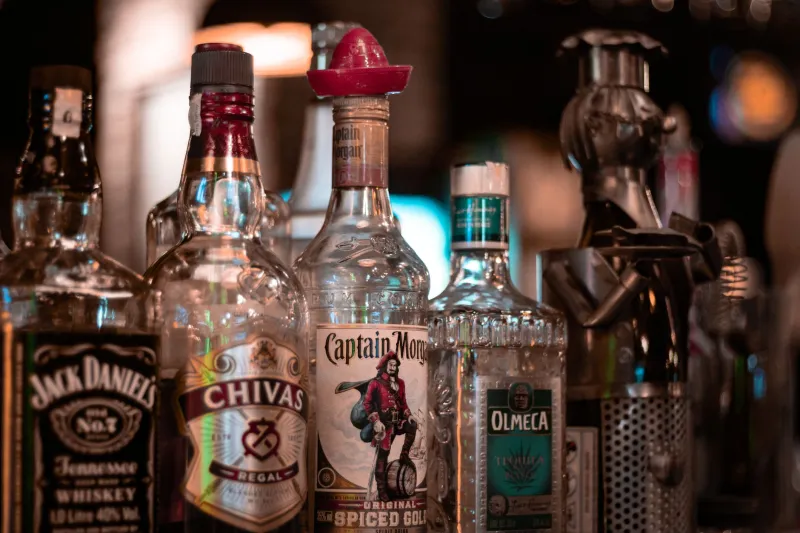
There's a particular moment that happens in a good British inn. You've barely sat down, coat still half on, and your eyes drift to the bar. Not to flag someone down — not yet — but just to look. At the pump clips. The whisky shelf. That slightly mysterious bottle tucked in the corner with a hand-written label and what appears to be a small drawing of a sheep on it.
That shelf, that back bar, that collection — it's not decoration. It's a statement. And if you know how to read it, it tells you almost everything worth knowing about the place you've just walked into.
More Than a Stocking Exercise
Most of us don't think too hard about why a particular inn carries a particular gin. We assume it's down to the distributor, the deal on offer, or whoever turned up with samples on a Tuesday. And sometimes, honestly, that's the whole story.
But at the inns worth travelling for — the ones that stick in your memory long after the journey home — the drinks list is a deliberate thing. A considered thing. It reflects a landlord's values, their obsessions, their relationships with producers, and their understanding of the community they're serving.
Take a village inn in the Yorkshire Dales that stocks three different ales from a brewery operating less than four miles away. They don't do it because they have to. They do it because the brewer is a regular, because the hops come from a farm the landlord can see from the car park, and because it gives them something real to talk about when a curious visitor leans on the bar and asks what's good.
That conversation — that connection — is the whole point.
The Whisky Wall and What It Means
Few things signal an inn's ambitions quite like its whisky selection. A modest row of the usual blends says one thing. A carefully assembled collection of regional single malts, each one chosen for a reason the landlord can actually articulate, says quite another.
At a small inn in the Scottish Borders, the proprietor spent years building a back-bar collection that traces a journey — literally. Every bottle represents a distillery she visited herself, and a small handwritten card beside each one notes not just the tasting notes but the name of the person who showed her around. Guests who spot it often spend twenty minutes reading those cards before they've even ordered.
"People ask me why I bother," she says. "But when someone picks up a dram because of a story I've told them, and they love it — that's worth more than any marketing I could do."
It's a philosophy that turns a drinks shelf into something closer to a travel diary.
Ales That Know Where They Come From
The real ale scene in Britain has never been more interesting, and the inns that engage with it properly are reaping the rewards. Stocking a rotating guest ale from a local microbrewery isn't just a nice gesture towards the community — it's a way of anchoring the inn in a specific place and moment in time.
There's a long-standing inn in rural Shropshire that changes its guest pump every week, always sourcing from breweries within a thirty-mile radius. The blackboard above the bar doesn't just list the beer name — it includes a two-line description of the brewery and, occasionally, a note on what was happening locally when the batch was brewed. Hop harvest season. A village fête. A particularly brutal February.
It sounds like a small thing, but it creates a genuine sense of occasion around something as simple as a pint of bitter.
The Bottle in the Corner
Every great inn seems to have one. The bottle that doesn't quite fit anywhere else — the sloe gin made by a guest who stayed three winters running, the bottle of Calvados brought back from a landlord's honeymoon in Normandy, the local elderflower cordial that technically isn't alcoholic but sits on the spirits shelf anyway because where else would you put it?
These outliers matter. They're the drinks that exist outside the logic of margins and supplier relationships. They're there because someone cared enough to put them there, and that care is immediately legible to anyone paying attention.
At a rambling inn on the North Yorkshire Moors, the landlord keeps a small collection of bottles that guests have brought him from their own travels — a tradition that started by accident about a decade ago when a regular returned from a trip to Okinawa with a bottle of awamori and insisted on leaving it behind. The shelf now has contributions from fourteen different countries, each one labelled with the guest's name and the year.
"It's become a bit of a thing," he admits, in that magnificently understated way that innkeepers tend to describe things they're quietly very proud of.
What It Means for the Guest
For anyone planning a stay at a British inn, the bar is genuinely worth a second look before you order. Not because you need to make an impressive choice, but because it's one of the fastest ways to understand what kind of place you're in.
An inn that stocks only the major national brands and nothing local is telling you something. An inn that has a hand-drawn map on the bar showing every producer within twenty miles is telling you something quite different. Neither is necessarily wrong, but knowing what you're reading helps you settle in faster — and ask better questions.
Because the best innkeepers, the ones who've thought about every bottle on that shelf, are almost always delighted when someone asks. Ask about the cider. Ask about the whisky with the unusual label. Ask why there are three different local gins but only one vodka.
You'll get a story. You usually do.
A Collection Is Never Really Finished
What's perhaps most telling about the inns that treat their drinks selection as part of their identity is that they never quite consider the job done. There's always a new brewer to try, a producer to visit, a bottle to track down after a guest mention.
It's an ongoing conversation between the inn and the world around it — and that, more than any interior design choice or carefully worded website, is what makes a place feel genuinely alive.
Next time you walk up to a bar and find yourself reading the labels rather than just ordering the first thing that comes to mind, take a moment. Someone put those bottles there deliberately. And they probably have a very good reason why.